

The offline premium
Can you pay your way into an offline world?

This edition is part of a series called An Algorithmic Becoming. The previous edition explored what it means to build a self online. This one asks how we negotiate for an offline life.
Don’t look up.
Don’t look up.
Don’t—
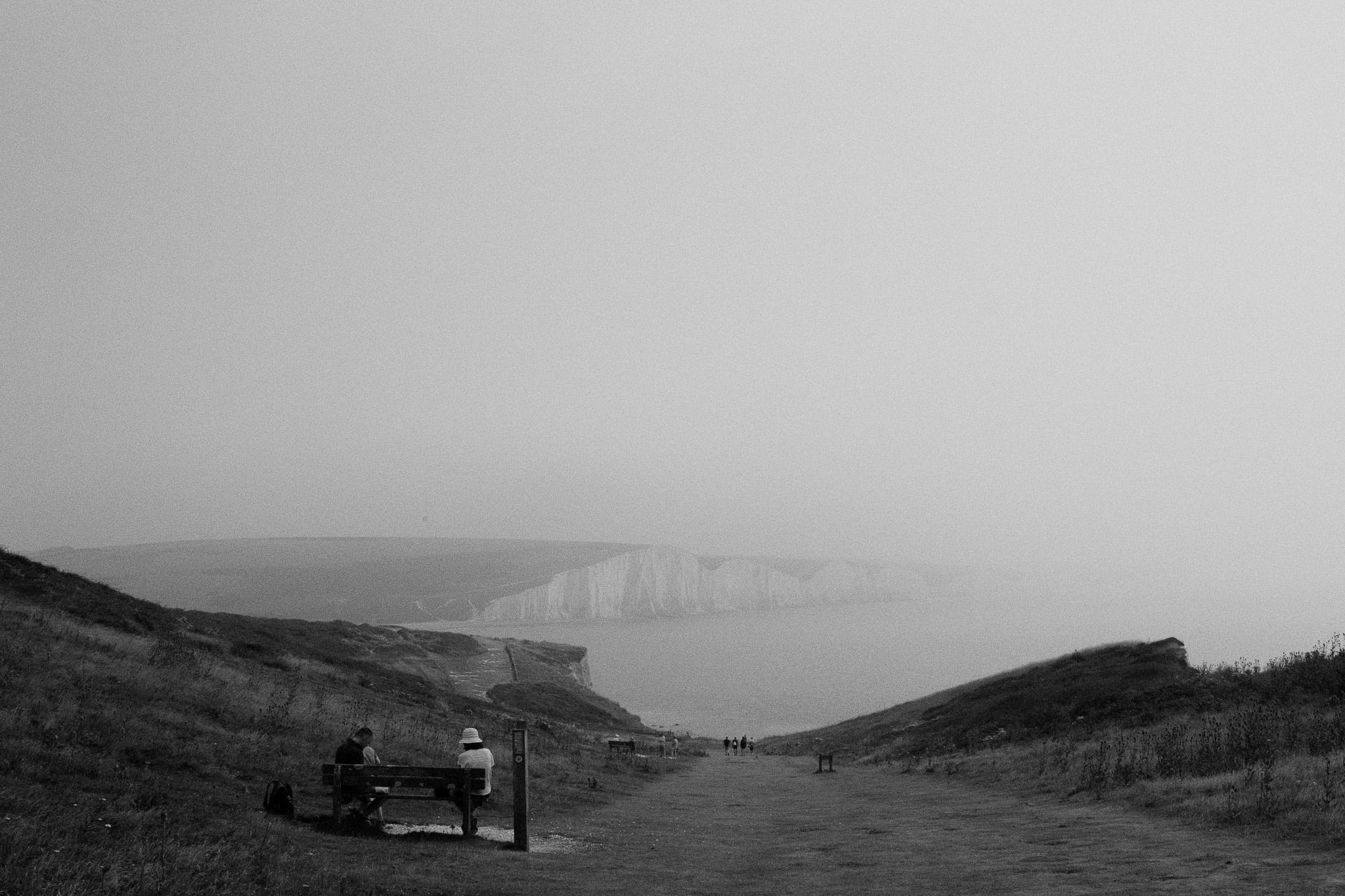
I was pacing my breath, keeping my feet steady as I forced myself to focus on the next couple of steps, instead of gauging the distance ahead of me. It was summer, and I, along with two others, decided to hike Seven Sisters. It’s this series of chalk cliffs located on the south coast of England, known for its unique form. Its peaks and dips mimic the body of water in front of it—wave-like. And as the name suggests, there were several hills to climb1. I was in the middle of climbing one of them. A part of me wanted it to be over soon, but I knew I still had a long way to go. I didn’t want to discourage myself by looking up at the inclined plane. Better to block my view to what’s directly in front of me.
When I finally arrived at one of the peaks mid-point our trail, I took out my phone to take pictures. A documentation for myself that I made it thus far. I pointed backwards to capture the distance I had travelled, and forwards to capture the scenic rows in front of me. The clouds were clearing up, and the blue skies were emerging. This is breathtaking, I thought to myself. It was a warm day, I could feel the sea breeze on my face, and I felt pumped from the walk. It felt good. I felt good about myself.
Right there and then, a message landed in my inbox: “Hi Dita, we haven’t seen your bank transfer for August rent. Can you pay ASAP?” Oh, shit. It was the second of August. My rent was due every first of the month. I had forgotten. I tried making the payment right away, but the signal was patchy—I couldn’t log into my banking app. I told my letting agent that I was out of town and the signal was bad, and that I would make the transfer once I got a decent connection. She replied: “Ok,” with a thumbs up. I let out a tiny sigh of relief. I could put this off and be present for now.
Esther, one of the friends I was travelling with—perhaps noticing I was getting tired and distracted—pointed at our finish line. “See that lighthouse over there? That’s where we’re heading.”
We headed towards the beach, where I took a nap underneath my umbrella while my friends went for a swim. I had ice cream while we waited for the bus heading to the station, and a pint of beer while we waited for the train heading to London. I didn’t get anything from the gift shop at that coastal town. My souvenirs from the trip were the sunburn on my back and on my chest, and the digital footprint on my phone, which says I walked 28,588 steps.
It was a great day.
If there is ever a day I wish I wasn’t connected to the internet, this day would be it. I wish I had been unreachable. Not to evade responsibilities—I wish I hadn’t forgotten the rent. But it felt like an unnecessary interruption to an otherwise perfect summer day. In hindsight, I wish someone had taken my phone and locked it away for me.
That scene from two summers ago returned to me as I have been thinking through themes of digital disconnection. More specifically, the desire to go offline. Lately, I’ve been noticing it everywhere.
The other day, I was sitting beside my sister at the dining table and saw a notification pop up on her screen while she was scrolling through Instagram. It said she had reached her daily time limit. She closed the app right away. “Is that from the app?” I asked. “Yes. You didn’t know it could do that?” I did not. I’ve seen different versions of this attempt at disconnection. From usage moderation to complete abandonment. I know numerous people who haven’t posted anything, not just in months, but in years.
I, too, have acknowledged this desire to live my life offline for a while now. My last post on my Instagram feed was in March, but it was work-related. My last personal life update was in September. This is so far removed from the social media adage I grew up with: no pic, hoax. It was a popular Indonesian internet expression that suggests that if there is no visual evidence, it didn’t happen2. In a way, it is saying that you are not “living” if you don’t post about it. A good life needs to be visible for the online gaze.
It looks like we have—to an extent—abandoned that.
These anecdotal observations are pointing to something larger. The desire to go offline is becoming one of the defining aspirations of generations who have lived most of their lives connected to the internet 24/7. An offline life sits in a distant nostalgia, if not constructed through references and imagination. Today, its reconstruction can be read as a growing distrust and frustration over algorithmic feeds, and over the quality of life when lived “chronically online”. While that term has always carried some ambivalence, it used to be a marker of cultural sophistication; that you are someone who understands the references of internet culture. Now, the opposite—“chronically offline”—is gaining currency.
People are swapping smartphones for flip phones for a month at a time. Singles are abandoning dating apps, with Bumble losing 90% of its value since its IPO. They are turning to bars, run clubs, and hobby groups. Phone-free spaces are proliferating: restaurants, bars, schools, weddings. The wellness industry has named analog living a major trend. Vogue has reported that being offline is becoming a status symbol. And across developed markets, daily social media use has been declining since its 2022 peak—rare for internet behaviour, which had previously moved in only one direction.
Something has shifted in recent years. People want an offline life. The question is: has anyone succeeded?

The invitation stopped me mid-scroll.
It was an attempt at a world record: they were looking for 1,000 people to watch sunset without their phones. The offline sunset, so it was called. It sounded intriguing, so I screenshotted the post as a reminder to register. The world record was to be made the following Saturday, on the 29th of March 2025.
I had seen a few posts from the organiser by this point, and had wanted to join one of the more casual gatherings. It was a social club that runs “offline hangouts” in London—as well as in a few other cities around the world—as a space where people can unplug, relax, and connect. They would usually host the meetups in cafes and parks, and there seemed to be a good turnout. I saw clips: people reading, journaling, doing arts and crafts, playing chess. I was drawn because they looked pretty chill. The only barrier for me was the ticket price. I was living on a budget and wasn’t too keen on spending on things I could do by myself for no cost. The offline sunset, on the other hand, was free.
On the event app Luma, over 4,000 people had registered to participate. I was one of them. While I didn’t end up going—I had somewhere else to be—I received an email from the club a few days after the event: they had broken the world record. “On Saturday, over 1,700 of you gathered on Primrose Hill and created the largest phone-free gathering since the smartphone’s inception,” it said.
As it so happened, Esther, the friend I went hiking with, was there. In fact, she was one of the ones assisting the organiser at the world record attempt, giving out instructions to attendees on where the sunset-watching spot was and when they should turn off their phones. Her volunteering work for the club, which she was doing as fieldwork for her Master’s research, would usually be less hectic than managing a crowd of over 1,000 people in an open field. But the scale helped in bringing out themes of ambivalence and contradictions surrounding going offline.
As much as it seemed that a lot of people were keen on doing so, many couldn’t commit. She wrote about it in her dissertation:
“It’s time to turn your phone off,” I told a large group. “Then you hold it up to the sky for the drone to take a photo.”
“Do we have to actually, y’know, turn it off?” someone asked. “Can’t we just hold it up?”
“Turning it off is kind of the point,” I said. “And it’s only for a couple of minutes.”
The complaint was not an unusual one, it turned out.
Another volunteer noticed many people still had their phones on that evening. Which makes you wonder: what’s the point of an offline sunset if you don’t want the offline part?
I caught up with Esther last month over Zoom, having read her dissertation and wanting to understand why the subject matter appealed to her. There was a seven-hour time difference between us, so we scheduled the call one weekend, where our agendas were more flexible—morning her time, evening mine. She just had a buzz cut before the call, which was very on brand for her. When we did our hike that summer in 2024, she had a short bob in light copper. A few weeks later, when we met for a group picnic, she had changed it into a brighter tone. That evening on Primrose Hill, she had a much shorter cut—I had noticed it was her walking down the hill in one of the clips I saw on YouTube of the event, posted by a media outlet. Esther noted in her dissertation that there were a few camera crews and news presenters at the spot.
While it seemed to be an obviously interesting topic to study, especially as a digital anthropologist—and, evidently, by the media attention it garnered—it turned out that the digital detoxing social club wasn’t Esther’s first choice. She initially wanted to do her research on doomsday preppers. You might know them from a National Geographic TV series, which brought the subculture into mainstream awareness. They are communities anticipating a collapse of modern society and are preparing their survival kits for the unfortunate event. Esther had to abandon that project because it didn’t receive approval from the ethics committee. So, she needed a new topic.
“One of the things I’m interested in is non-typical relationships to technology,” Esther said. “That’s what interested me about the preppers. Their vision of the future is one where they don’t take for granted that phones are going to exist, that the internet is going to exist.” That eventually led her to the offline social club.
I had a very biased question to ask Esther: was it worth it? Did people feel they got good value from paying £12 to £20 to have their devices locked in a “phone-jail” for an evening?
“A lot of people were very much like, I cannot do this without it. I can’t do it when I’m on my own,” Esther said, explaining that without the activities arranged by the organiser, people find it difficult to be away from their phones for a few hours. She met with people who had travelled a long way for the phone-free gathering.
One thing was clear, however: people’s reluctance when they were asked to disconnect from their phones during that offline sunset was not an isolated event. It was a recurrent pattern. Esther noted how in the regular hangouts, the organiser wouldn’t be able to collect everyone’s phones. In fact, about half of the attendees kept their phones to themselves, albeit switched off. And once the event was over, they immediately returned to their phones.
As easy as it is to point out the irony there, it goes to show how deeply attached people feel to the physical presence of their phones—that taking it away from their reach translates into feelings of disorientation. A lot needs to happen to compensate for the lack of safety you feel when you are without your phone.
“The events themselves were exceptional, and they were very removed from the everyday structure of life,” Esther added. You have a nice venue, a live musician playing the piano in the background, and like-minded people to talk to. This made being offline enjoyable.
But doing this on your own, as so many try to do, has proven to be a mountain to climb.
My friend Sun3 has been trying to regulate her digital habits for almost a decade.
It’s a project she has been doing on her own, with the help of digital tools she found online. She set timers to limit her social media usage. She installed app blockers on her phone and browser. She even has two phones—the one designated for work has none of the apps that often distract her.
But for all the measures she has come up with, there is always a loophole. She found that she could browse from the incognito window, and the site blocker extension couldn’t track her activities there. She would circumvent systems she built and found herself in constant negotiation with her own boundaries.
“I have a lot of unhealthy justifications for myself. Okay, I’m not opening Instagram, but I’m opening Netflix instead,” she said.
Sun reckoned that she hadn’t always struggled like this. There were periods in her life where managing digital distractions was an easier task. It was a time when her life was fuller, when it was easier to find groups to socialise in-person with, when her work had a more rigid structure. Now, as a freelancer, responsible for her own schedule, she finds it harder to keep herself in check. Digital regulation systems that used to work no longer do.
“I have come to the conclusion that it needs to come from myself,” Sun said, alluding that the biggest barrier to her digital detoxing efforts is her own willpower.
But how much willpower is required to navigate a system filled with contradictions? What if maybe there’s nothing wrong with her willpower—and that she’s not at odds with herself? Perhaps she’s at odds with the fact that her problem and solution came in one package. No wonder a person gets stuck in a loop.
Going offline is difficult when it is made as if something is being taken away from you. At the club where Esther volunteered, going offline becomes an agenda item added to your evening. It is a collective destination.
It used to be the case that these destinations did not carry price tags with them. They were just available and accessible.
“A lot of the things we would do instead of going on the internet don’t exist anymore. Or they exist, but they’re expensive,” Esther said. There used to be more avenues for local communities to gather—youth clubs, local magazines, council-funded swimming pools. Esther herself has long been a beneficiary of these infrastructures of leisure. They are, however, increasingly being defunded or privatised. “Leisure and pleasure are as much a human right and as much a public necessity as trains or roads or healthcare,” Esther argued. They are public goods that need public funding.
While it is nice to be able to pay for an offline evening—and it does help remove pressures from the individual to carry the weight of a structural problem by themselves—it is still an insufficient solution to a widespread malaise. As much as we’d like to pay our way into an offline world, the fact of the matter is, that world still needs to be built. And once built, it will require regular maintenance.
That brings me back to my hike that summer in 2024.
It would be easy to take this vast stretch of land for granted. To see it as just another charming scene of the English countryside. But the coastal path I walked on was fought for, again and again.
In 1926, a group of property developers proposed building a new town above the cliffs. They were opposed by an unlikely coalition which included a poet, a mother of a fallen World War I soldier, a pilot, and a walking group. Opponents were given one month to raise £17,0000—the equivalent of half a million pounds today—to buy out the developers and halt construction. Against all odds, they succeeded, ensuring the public can benefit from the space for generations to come.
There were more legislations being put in place since, including the 2010 designation of the South Downs National Park, protecting Seven Sisters as part of the national park from future developments.
On top of that, throughout history, there have been groups campaigning and advocating for the right to roam—to give the public the legal right to access land for recreational purposes, regardless of who owns it.
The clifftop I walked that day was not a given. It was argued for, funded, and protected.
The offline world will need to be fought for the same.

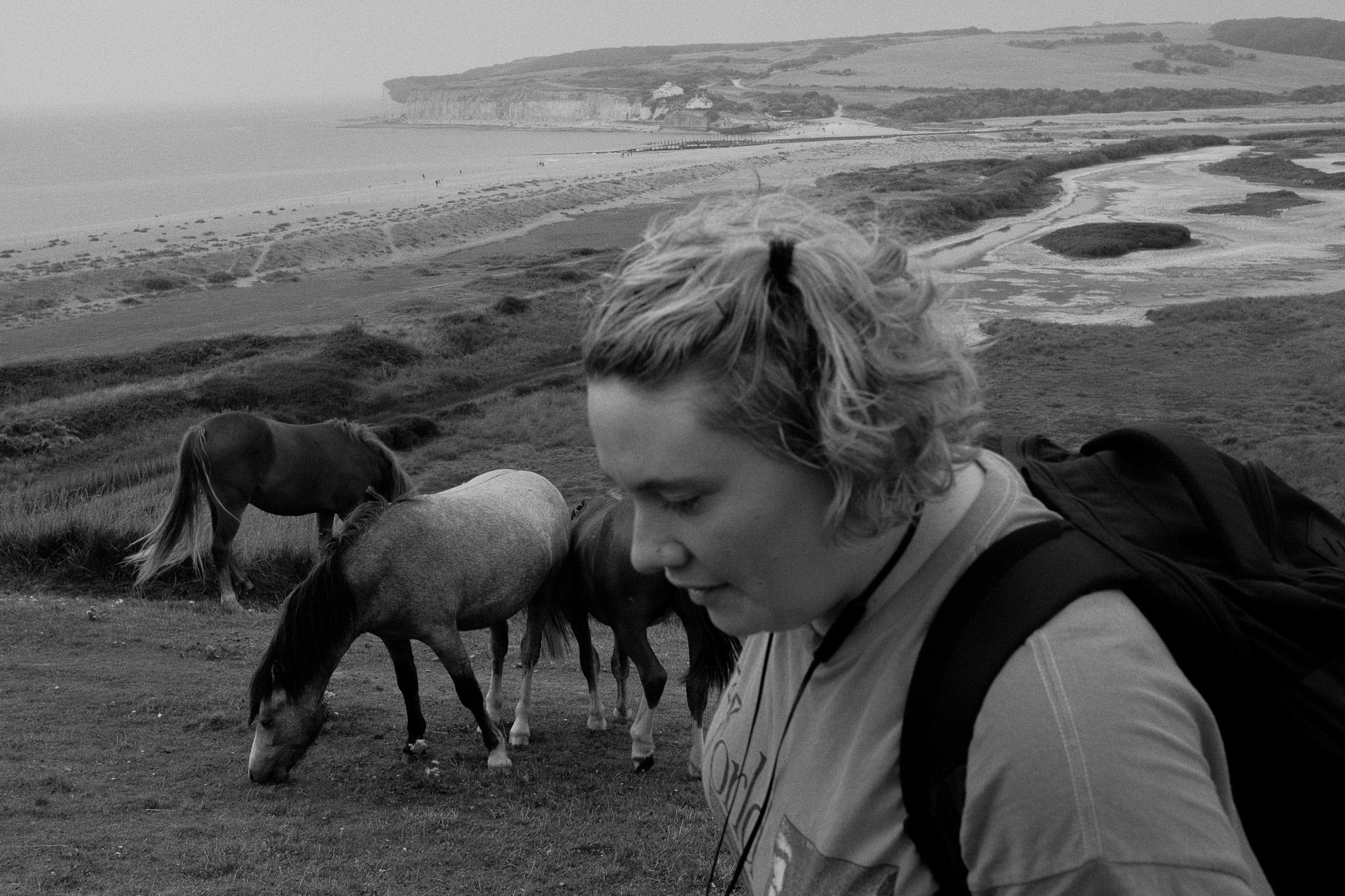
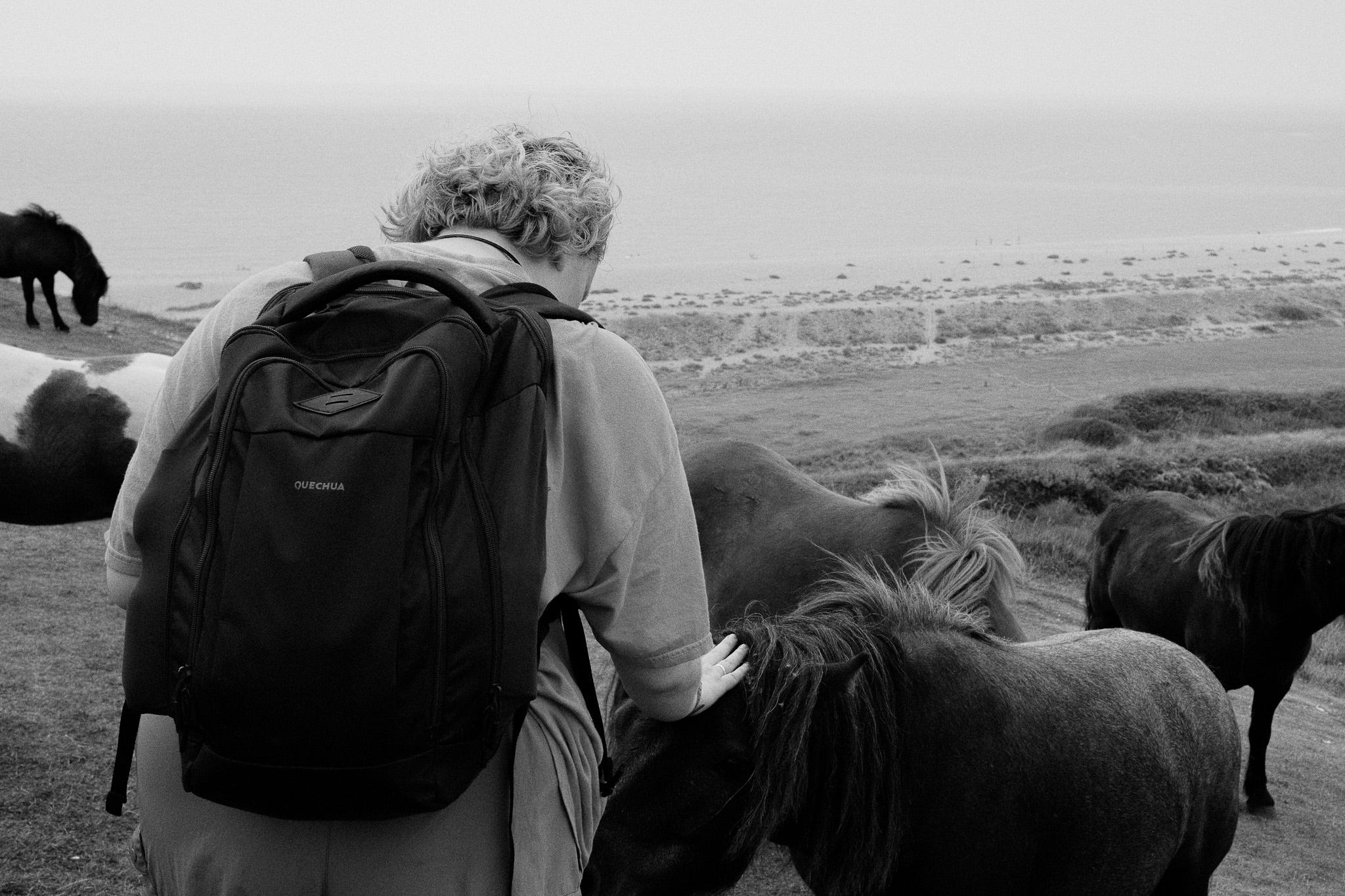
Photographs from the trip, taken by the author
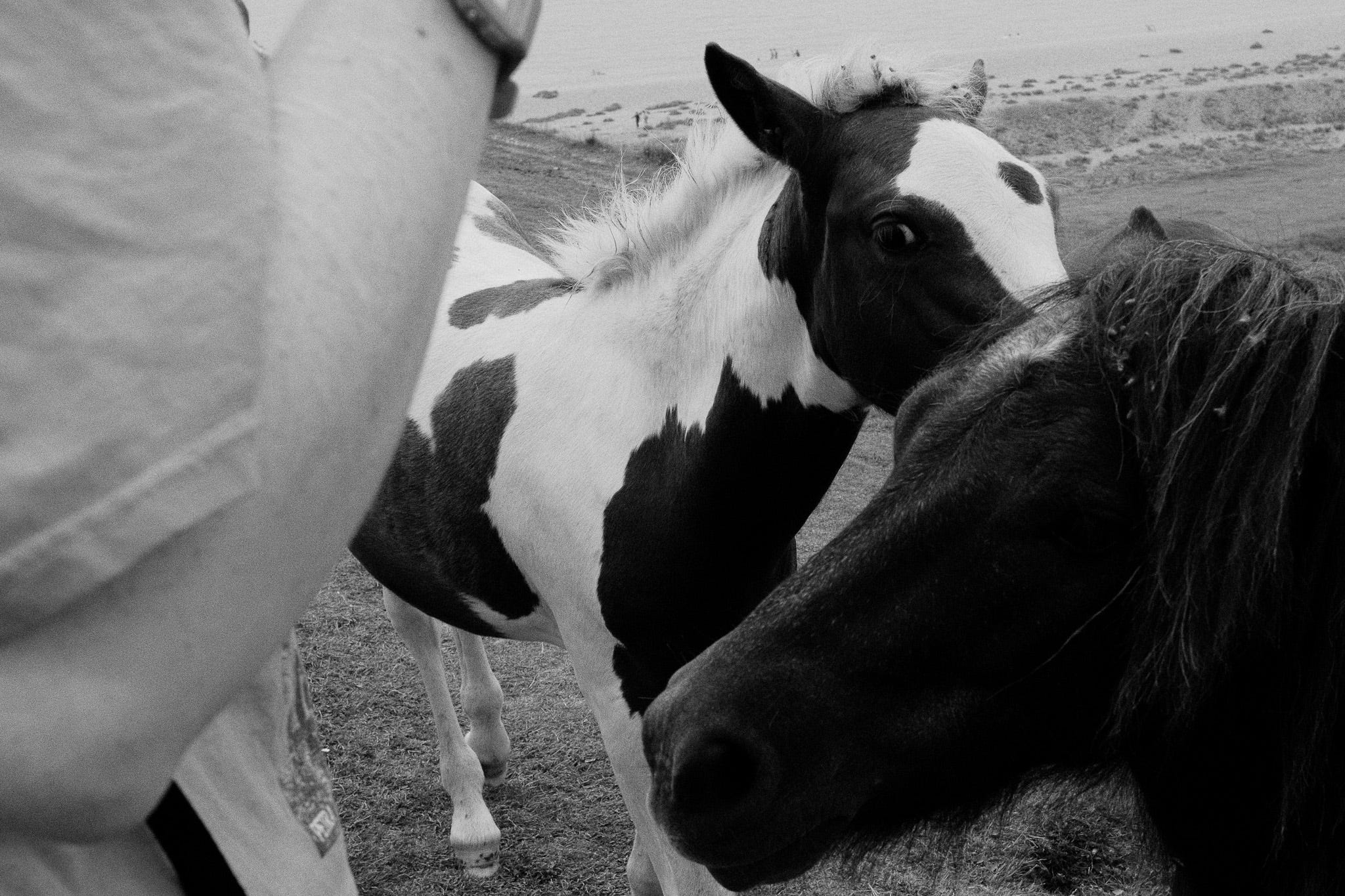
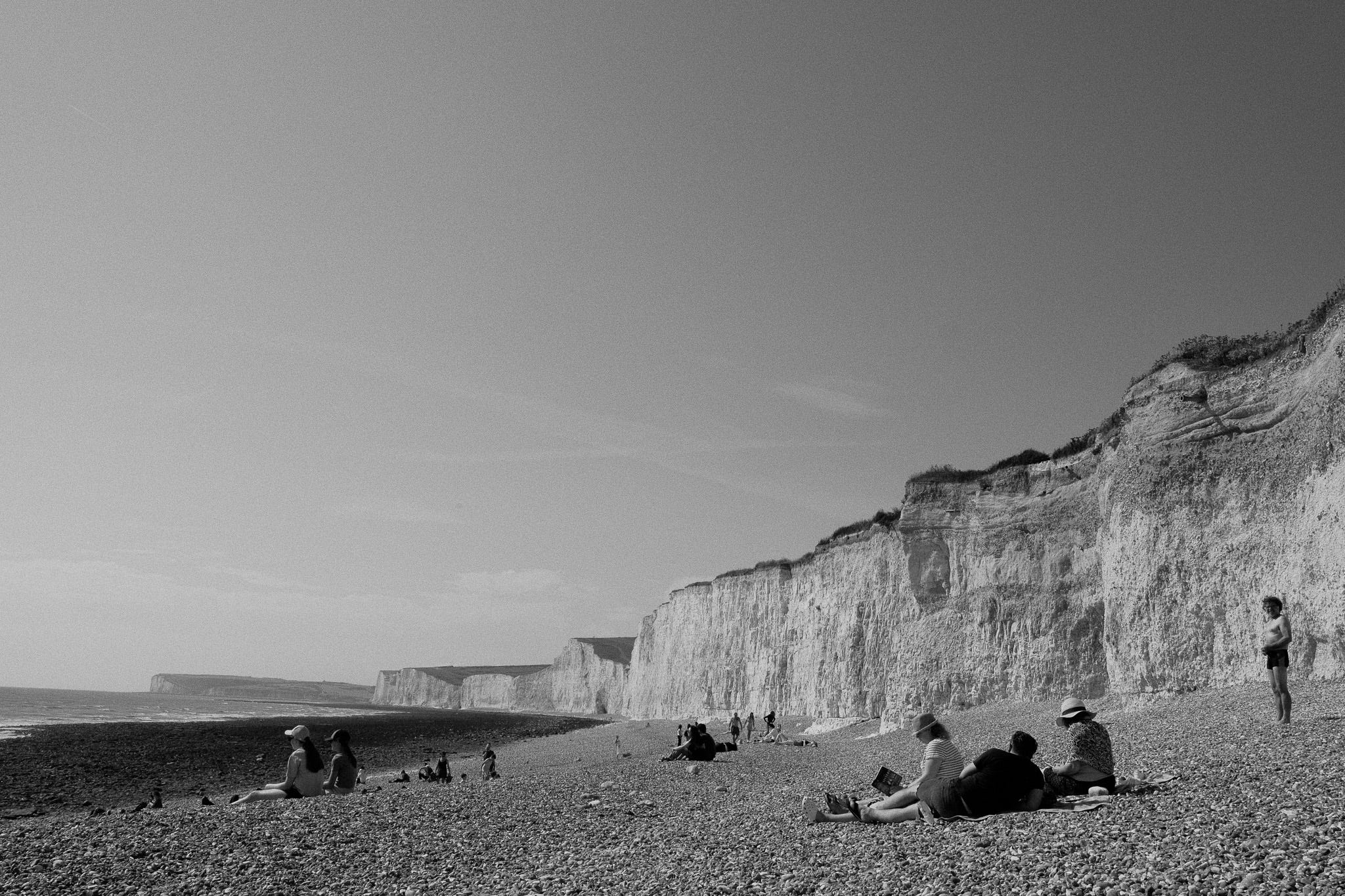
While they are known as “Seven Sisters”, there are actually eight hills.
There is also the more global “pics or it didn’t happen”, which originated from a gaming forum. It is a phrase used to challenge absurd claims by inquiring photographic evidence.
The name is pseudonymised.
Hello. Thank you for sharing this. :) I found the essay really thoughtful, especially because it doesn’t romanticize “going offline” as some simple individual choice. I like how you framed it as something structural as well—how offline spaces, leisure, and even boredom used to be more naturally available before everything became mediated through screens and platforms.
I also relate a lot to the difficulty of actually disconnecting. Sometimes I realize I’m not even actively enjoying being online, yet being offline still feels strangely unsettling. Your writing captured that ambivalence very well.
Thank you for another great piece! Evidently the piece also resonates because I'm yet another screen-addicted internet roamer! But the section on leisure infrastructure is definitely a food for thought. With the waves of neo-liberal privatisation that is happening and how leisure is another political tool, I learned lots from your perspective in highlighting the structural barriers in going offline. And what a reminder too, that lots of things that we take for granted is ultimately a result of someone, somewhere, fighting for it. Looking forward for the next articles!